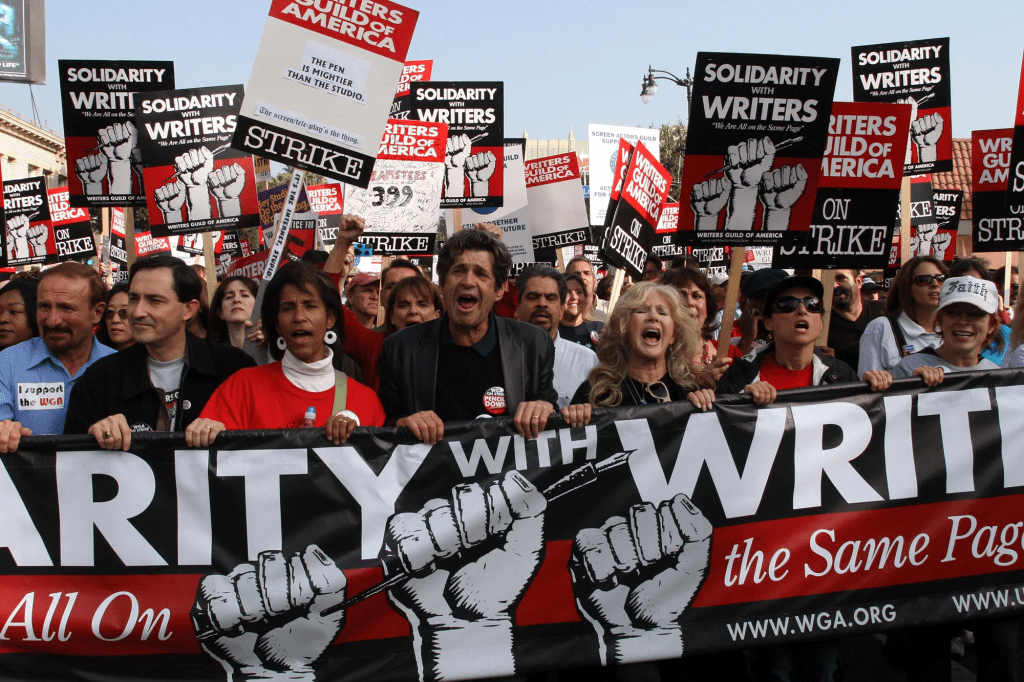
Hollywood Writers Strike TLDR: The WGA is negotiating to protect writers from the use of AI in screenwriting, with the future of TV and movie production at stake. The WGA strike has caused some delays and industry insiders believe it could be a long one. Reality TV is expected to come to the rescue of the American networks due to its production model and faster delivery turnaround. Networks are gearing up to produce more unscripted content to mitigate the impact of the strike. The crisis in Hollywood could be an opportunity for the UAE to leverage the growing interest in UAE-based reality TV shows, which in turn could potentially boost visitation from one of its key inbound source markets.
All is not well in La La Land. On May 1, the Writers’ Guild of America (WGA) officially announced that they are on strike, with the writers for the world’s favorite TV shows and movies swapping their pens for picket signs for the first time since 2007. As production for Hollywood scripted shows grinded to a halt in 2007-2008, opportunity arose for reality TV, and this has changed the landscape of the silver screen forever. As the dispute over ‘mini-rooms’, streaming residual rights, and the use of artificial intelligence rages on in 2023, is there potential for UAE entities to leverage and tap into the set-jetting trend?
Hollywood Writers Wars Episode I: The Netflix & ChatGPT Menace (2023 Strike)

There has been an explosion of television production following the advent of Netflix and the decline of cable TV, as major media companies have invested billions into streaming services to get a piece of the pie. However, the compensation from streaming services has left much to be desired for the writers. Residuals, which are compensation paid for the reuse of a credited writer’s work, were previously a crucial source of income for the middle-class writer. It has been upended by streaming. The WGA report, ‘Writers Are Not Keeping Up’, found that while Hollywood studios profits have remained high and spending on content has grown, more writers are working under the Minimum Basic Agreement (MBA) minimum now than a decade ago.
Artificial intelligence has also become a key issue in the 2023 WGA writers strike, with many looking to establish guardrails about the use of AI in screenwriting. Writers on the picket lines are concerned that Hollywood studios will use AI to write scripts, reducing the role of writers or even making the job obsolete. There is a lot riding on the future of TV and movie production in these negotiations, leading the WGA to claim that the “survival of writing as a profession is at stake in this negotiation”.
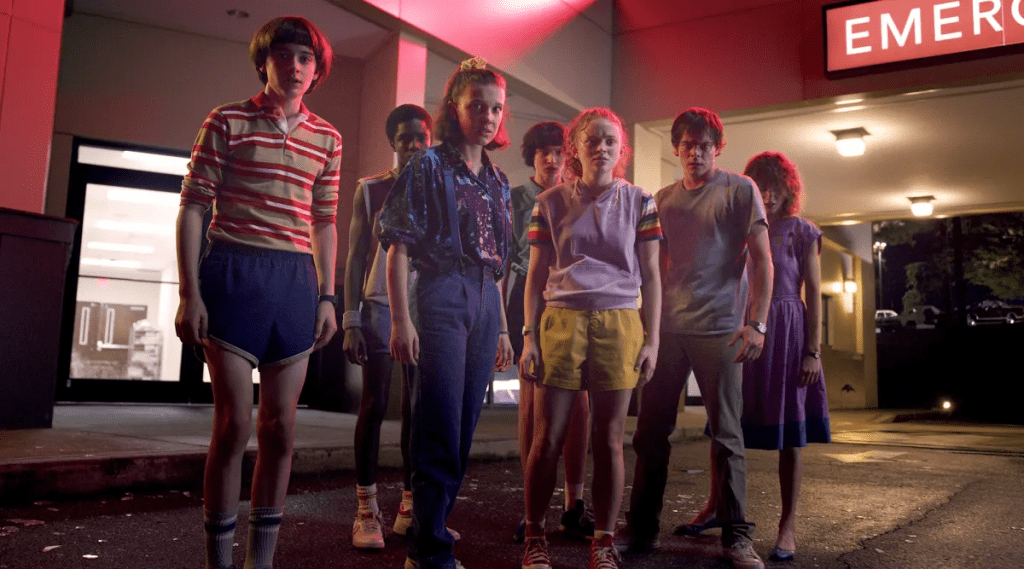
Several notable films and shows have halted or wrapped production early since the strike was announced, including “Stranger Things” (Netflix), “Blade” (Disney / Marvel), “Severance” (Apple TV+), and “Evil” (Paramount). Industry insiders believe that the strike could be a long one. Dough Creutz, Senior Research Analyst at TD Cowen, believes that a strike lasting at least three months is a “definite possibility”. However, because of the long production times, it is believed that only a very long strike will affect the movie pipeline. The major film studios have said they have enough movies in production to keep releasing them at a steady pace through the middle of 2024. Film studios plan approximately a year ahead of time; the majority of the films scheduled for release this year have already been shot.
However, there’s a looming threat of actors or directors joining their writing comrades on the picket line. 160,000 members of the Screen Actors Guild – American Federation of Television and Radio Artists (SAG-AFTRA) are currently voting on whether to authorize their own strike. The Directors Guild of America (DGA) has only gone on strike once in its 87-year history, which lasted all of five minutes. While the writers’ strike has caused some delays, additional work stoppages from either the actors or directors would bring all filming to a halt.
Hollywood Writers Wars Episode II: Attack of the Digital Download Clones (2007-2008 Strike)
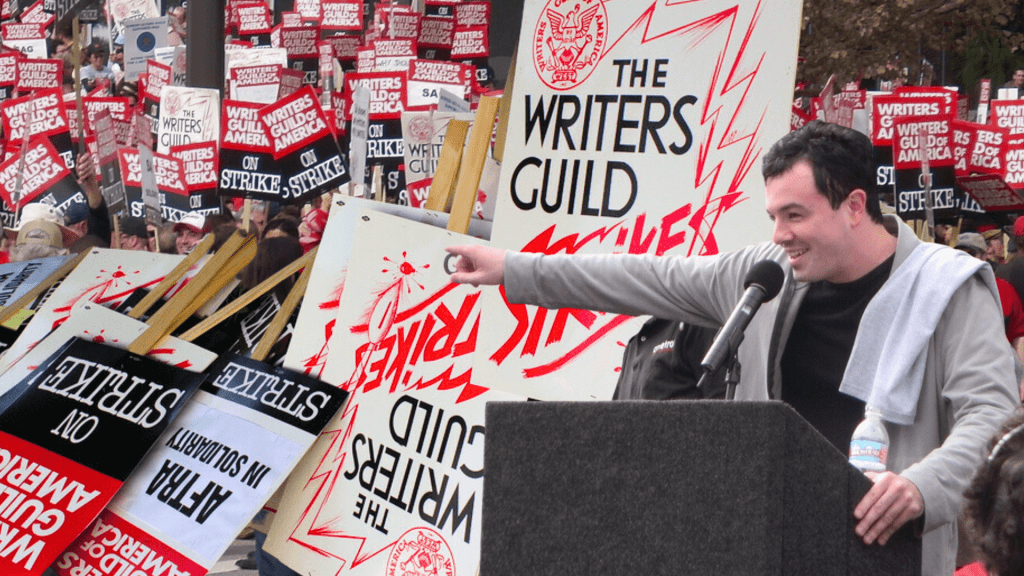
The last time members of the Writers Guild of America put downed their pencils joined the picket lines was a 100 days period from November 2007 to February 2008. The WGA waged war on the Alliance of Motion Picture and Television Producers (AMPTP) over compensation they received on their work distributed via new media forms and the internet. According to the Milken Institute, the writers strike resulted in a loss of 37,700 jobs and took a $2.1 billion toll on the Californian economy due to loss of output.
To avert the impending crisis, several productions raced to film based on whatever scripts they had in some form. The results of this were not great. The once-acclaimed TV show ‘Heroes’ suffered a significant drop in quality, which many attribute directly to the writers’ strike. The writers’ strike significantly derailed Season 2 of the hit program, causing the series’ quality to plummet and lose its cult fanbase.

007 spy caper Quantum of Solace was one of the major big-budget films that were directly impacted by the writers’ strike. James Bond may have the license to kill, but half-baked scripts are one situation the MI6 agent could not get himself out of. The strike caused an unfinished script to go into production, and it was widely panned by both critics and audiences alike, including lead actor Daniel Craig himself. The film was Daniel Craig’s second stint as the iconic spy James Bond and was widely considered his worst Bond film.
Another victim was Transformers, whose second installment had only a three-week writing window ahead of the strike. The writers gave director Michael Bay a loose treatment for the film to prevent delays in the production schedule. The result? A storyline that is seen as an incoherent mess. In the end, the strike won the WGA jurisdiction over writing for new media and outlined residuals for the reuse of their work. It is seen as an important victory for the writers, with Meredith Stiehm, president of WGA West, noting that with 50 percent of their work now on streaming services and platforms, they may not have been covered had they not won.
Hollywood Writers Wars Episode III: Revenge of the TV Exec (Rise of Reality TV)

As the writers for scripted shows down tools, it leaves a dearth of programming for TV executives. To counter this, they turned to reality TV. The 1988 WGA strike, which lasted 153 days, helped popularize “Cops”, a verite-style TV series tracking the encounters of on-duty police officers. The 2007 WGA strike once again pushed networks and studios to rely heavily on unscripted shows, where more than 100 unscripted shows returned or premiered. This lead to a boom in shows such as “Keeping Up With The Kardashians” and birthing “Celebrity Apprentice” to fill airtime. This strike, it is expected that reality TV will come to the rescue of the American networks.
Reality is as popular as ever, with “Love Is Blind” and “The Great British Bake Off” among the most-streamed original shows in the US, according to Nielsen. Because of their production model, which provides for more flexibility and a larger inventory of pre-produced content, reality television is mainly unaffected by the writer strikes. Reality television is less expensive to create ranging from $100,000 to $3 million per episode, and its stars are paid less. The delivery turnaround is also faster, and seasons almost always air back to back. With no end currently in sight for the strikes, studios are gearing up to produce more unscripted content.
Networks such as ABC and Fox have released previews of upcoming schedules, and it is clear both networks intend to lean on unscripted shows as a means of mitigating the impact of the strike. ABC’s reality TV filled fall rooster led The Hollywood Reporter to declare that ABC has the most strike-proof schedule of any of the broadcasters. Networks are also pushing back the starts of reality shows, with CBS premiering this year’s “Big Brother” in August, rather than the usual late June or early July, likely in order to run into the fall TV schedule. They are also dusting off old formats, with “Kitchen Nightmares” hosted by celebrity chef Gordon Ramsay, returning after a nearly 10-year hiatus.
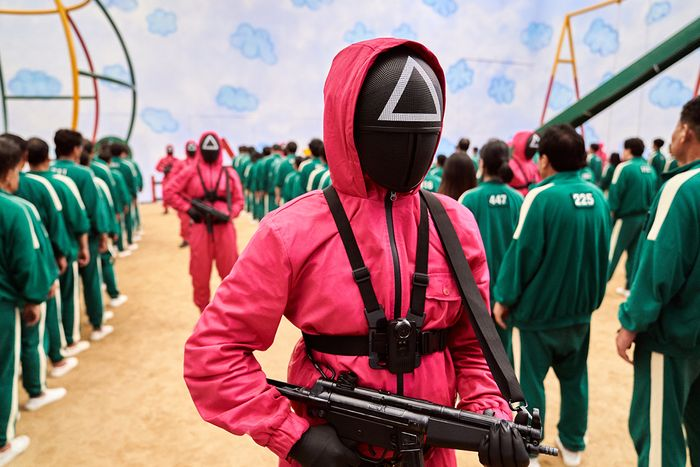
The globalized nature of streaming services has opened up American audiences to a lot of international hit shows, such as ‘Downtown Abbey’, and even non-English language shows such as ‘Squid Games’. As the strike continues, there could also be increased demand for content from outside the USA, particularly from English-speaking countries like the U.K., Canada, and Australia. The last writers strike saw mid-season pickups by networks of Canadian series like ‘Flashpoint’, ushering in a gold rush for Canadian producers looking to get their shows on American primetime. There’s even been talk of Hollywood studios turning to foreign writers, however this is unlikely due to warnings from sister writers’ guilds on the dangers of ‘scabbing’.
Hollywood Writers Wars Episode IV: A New Emirati Hope (UAE Reality TV)

So how can all this crisis in Hollywood potentially be an opportunity for the UAE? Well, for US networks, the emphasis on mega-hit shows is no longer due to audience fragmentation. They no longer aim to find one hit show that can appeal to tens of millions of people; it’s fine to find ten shows that appeal to a tenth of that number or, if they’re cheap enough, a hundred shows that can appeal to 1 percent of hit show audiences. Coupled with the increased focus on reality TV during the strike, the UAE could leverage the growing interest in UAE-based reality TV shows.
US TV channel HGTV has enlisted ‘Selling Dubai’, which follows real estate agent Maria Morris and her experiences selling real estate in the city. The Emmy award-winning ‘Million Dollar Listing’ has expanded internationally with in partnership with the UAE’s Image Nation and will be shot in Abu Dhabi. Similarly, the BBC has commissioned a third season of ‘Dubai Hustle’, which shows haus & haus real estate brokers trying to make a name for themselves in Dubai’s hugely competitive property market. In case there weren’t enough shows on Dubai real estate, Channel 4 has also commissioned ‘Made In Dubai’.

Combined with shows such as NBC’s The Real Housewives of Dubai and Netlfix’s Dubai Bling, the lifestyles of the Emirate’s ultra-rich seem to be one that could bode well for the American silver screen. With the UAE featuring prominently and hopefully positively on American TV, this could have the potential to boost visitation from one of the UAE’s key inbound source markets.
 The Travel Consigliere